LightMem: Lightweight and Efficient Memory-Augmented Generation

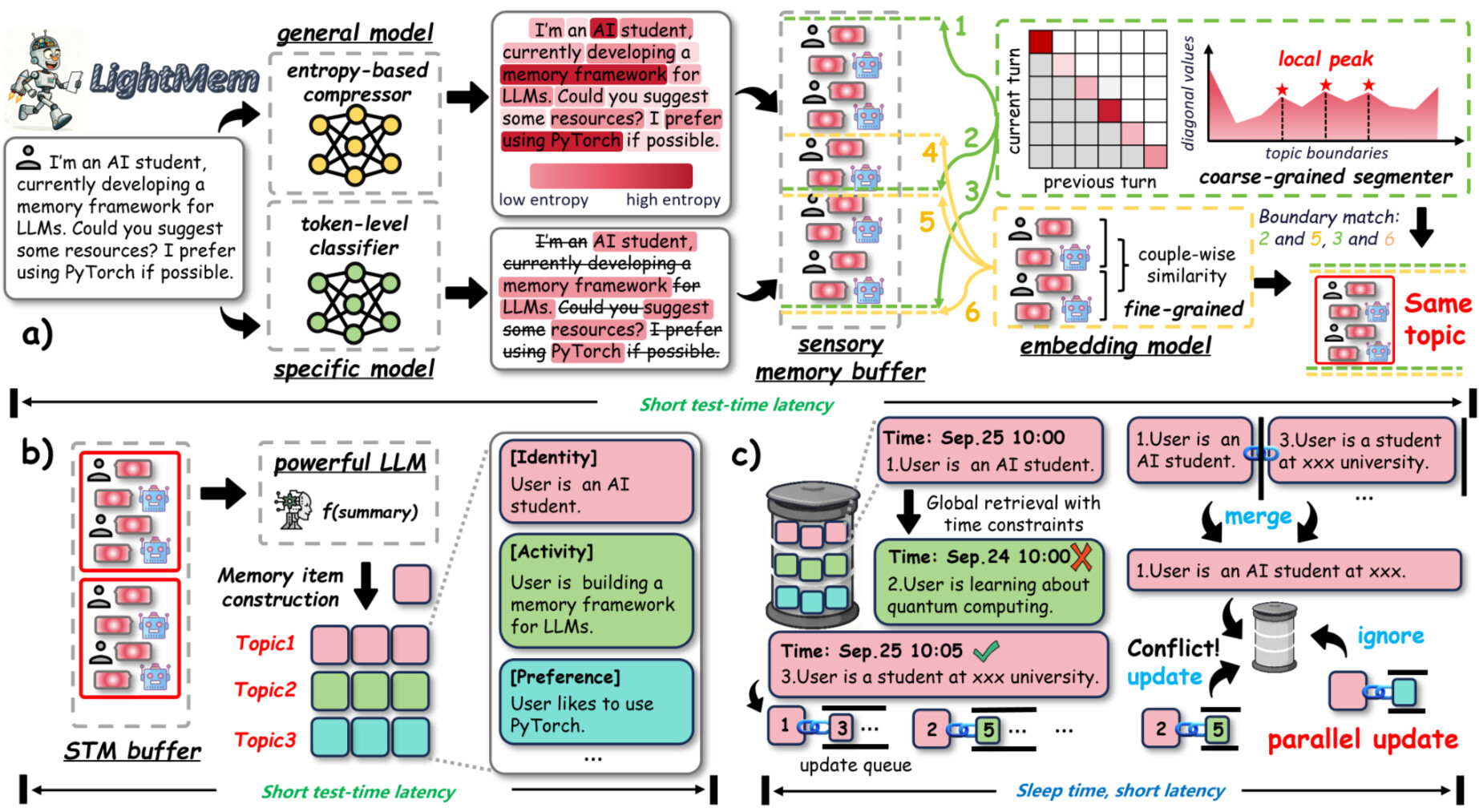
This post summarizes LightMem: Lightweight and Efficient Memory-Augmented Generation. The easiest way to give an LLM agent memory of past conversation is to stuff the whole history back into the prompt every time. That approach falls apart as conversations grow. A long context triggers the “Lost in the Middle” problem, where the model ignores information buried in the middle, and memory systems that re-read the accumulated history on every turn pay for it with higher compute and slower responses. LightMem targets both problems at once. It’s a lightweight memory-generation system that cuts token usage to a fraction of what existing systems need, while outperforming them. ...

April 6, 2026 · 4 min · Donghyung Ko

HashSmith, Part 3: I Automated My Way to a 27% Faster Hash Table

Discussion: Reddit (r/java) · Hacker News This is Part 3 of a series on building a high-performance hash table for the JVM. Part 1 — Building a Fast, Memory-Efficient Hash Table in Java (by borrowing the best ideas): designing a SwissTable-style map from scratch — control bytes, SWAR probing, and why open addressing beats chaining for cache locality. Part 2 — Further Optimizing my Java SwissTable: Profile Pollution and SWAR Probing: hunting down a surprising Objects.equals() hotspot, and why SWAR beat the Vector API on both ARM and x86. Part 3 (this post): handing the profiler to an AI agent — and what it found. Part 3: letting the agent drive At the end of the last post, I had a SwissMap that felt genuinely fast: the Objects.equals() profile pollution was gone, SWAR had beaten the Vector API on both ARM and x86, and I finally had benchmarks I was willing to trust. ...

April 5, 2026 · 17 min · Donghyung Ko

GraphRAG

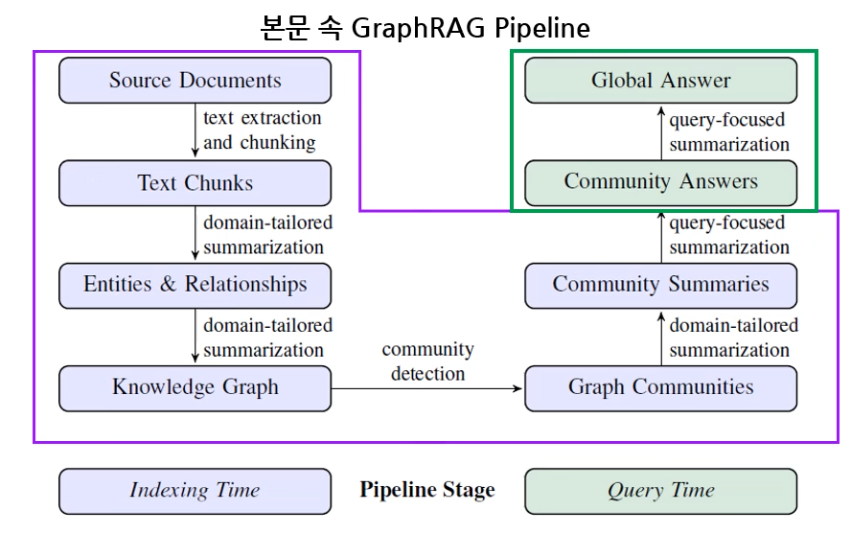
This post summarizes the Microsoft Research paper From Local to Global: A GraphRAG Approach to Query-Focused Summarization, also drawing on the video [Paper Review] GraphRAG by Seoul National University’s DSBA Lab. RAG works by building a trusted document collection ahead of time, then, when a question comes in, retrieving the relevant documents and handing them to an LLM as grounding for its answer. The basic pieces are indexing (chunking documents into a searchable form), retrieval (finding documents relevant to the question), and generation (producing an answer from the retrieved documents and the question). ...

March 13, 2026 · 7 min · Donghyung Ko
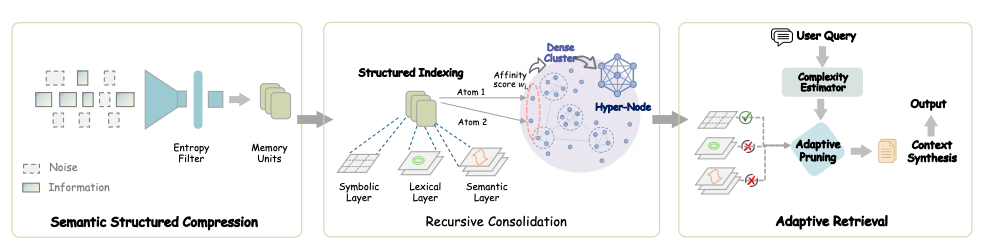
Diagram of the 3-stage SimpleMem pipeline

[Paper Review] SimpleMem: Efficient Lifelong Memory for LLM Agents

This post is a review of SimpleMem: Efficient Lifelong Memory for LLM Agents. Some parts of the paper have been updated after this post was written (2026-01-24), so there may be differences from the version discussed here. Background LLMs are stateless. As a result, previous inference outputs do not directly affect later outputs. Because of this property, a plain LLM can fail to maintain continuity in long conversations. In other words, it may look like short-term memory loss, where it cannot remember what was just discussed. ...

January 24, 2026 · 5 min · Donghyung Ko

SIMA: A Generalist AI Agent for 3D Virtual Environments

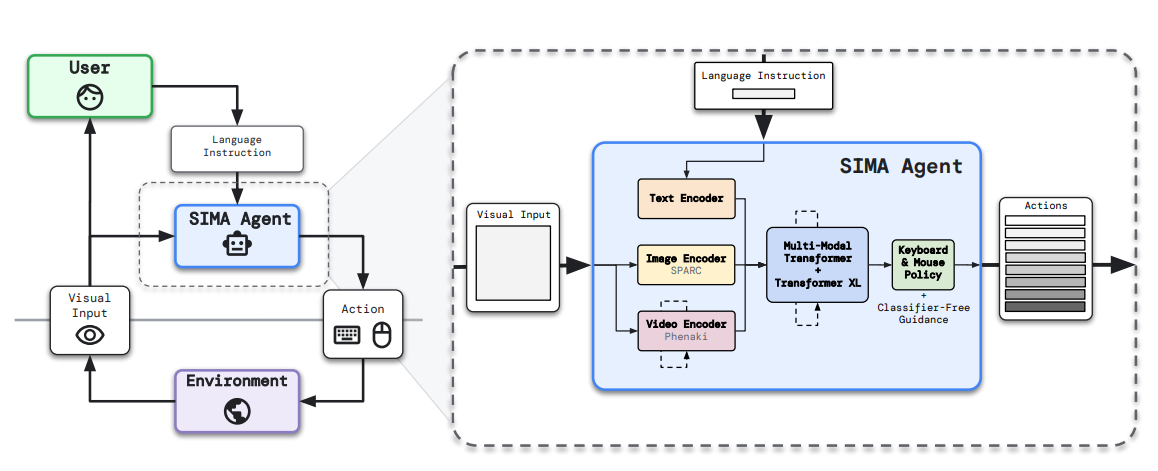
SIMA (Scalable Instructable Multiworld Agent), which DeepMind published in 2024, is a generalist agent built for 3D virtual environments. Give it a screen and a simple natural-language instruction, and it plays a 3D game almost the way a human would. Not One Game, But Many SIMA isn’t a bot tuned for one specific game, and that’s what makes it interesting. Working with eight game studios, DeepMind trained it across nine titles, including No Man’s Sky (exploring alien planets), Satisfactory (building automated factories on an alien world), and Valheim (a Norse-mythology survival crafting game). It can follow human instructions and play games it has never seen before. ...

November 16, 2025 · 3 min · Donghyung Ko