Java SwissTable optimization: profiling and SWAR probing

Further Optimizing my Java SwissTable: Profile Pollution and SWAR Probing

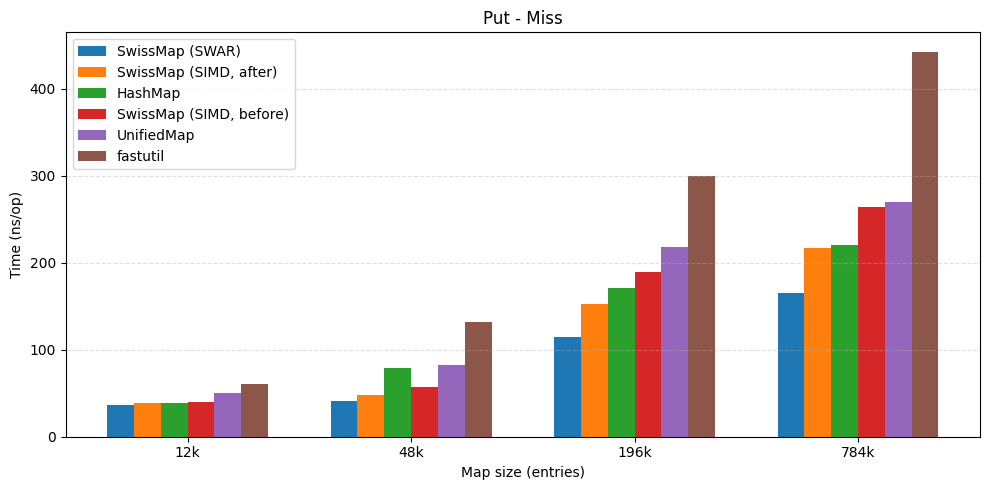
Discussions Reddit Part 2: optimizing the hot path (and finding a weird villain) “Why Objects.equals() showed up in the profile, and why SWAR beat the Vector API on ARM (and x86).” In the last post, I finally got a SwissTable-ish map running on the JVM and fast enough to make me smile. Naturally, that meant I immediately started staring at the profiler again, thinking: okay… but how do I make it faster? ...
December 17, 2025 · 16 min · Donghyung Ko
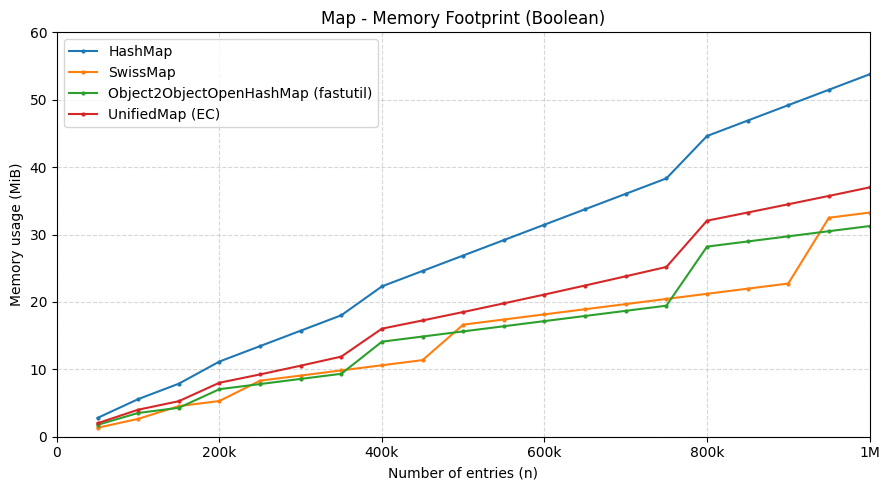
Memory footprint comparison for the Java SwissTable experiment

Building a Fast, Memory-Efficient Hash Table in Java (by borrowing the best ideas)

Discussions Hacker News Reddit One day, I ran into SwissTable, the kind of design that makes you squint, grin, and immediately regret every naive linear-probing table you’ve ever shipped. This post is the story of how I tried to bring that same “why is this so fast?” feeling into Java. It’s part deep dive, part engineering diary, and part cautionary tale about performance work. 1) The SwissTable project, explained the way it feels when you first understand it SwissTable is an open-addressing hash table design that came out of Google’s work and was famously presented as a new C++ hash table approach (and later shipped in Abseil). ...

December 12, 2025 · 15 min · Donghyung Ko

Debugging False Sharing

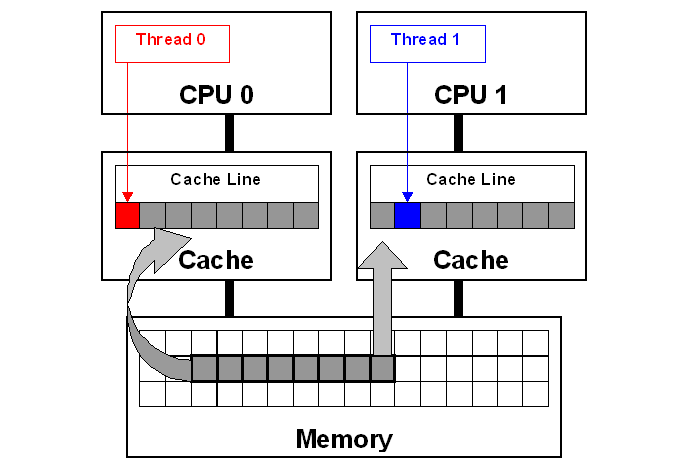
This post is my own summary of Netflix’s tech blog post Seeing through hardware counters: a journey to threefold performance increase, written the way I understood it, with some background I added along the way. The original post is the authoritative source, so check it directly for exact figures and details. The Problem A Netflix service was running short on CPU, so the team scaled its nodes up 3x. Given the CPU-intensive workload, they expected throughput to scale roughly in step. Instead, they got about a 25% improvement, and tail latency got worse. ...

December 12, 2025 · 5 min · Donghyung Ko

Accidental Quadratic Hashmap Iteration

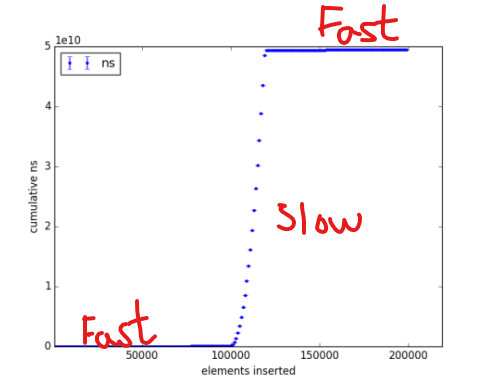
This post is my own write-up of Rust hash iteration+reinsertion and the related Rust issue/PR, written the way I understood them. The original is the authoritative source, so check it directly for the exact details. Rust’s HashMap had an interesting bug. The code looks completely ordinary, yet under the right conditions, an operation that should be O(n) blows up to O(n²). Reproducing the Bug Look at the code below. It inserts values 1 through 5,000,000 into a first hash map (one, that’s T1), then iterates over one and reinserts every value into a second hash map (two, that’s T2). Nothing fancy. ...

December 8, 2025 · 5 min · Donghyung Ko
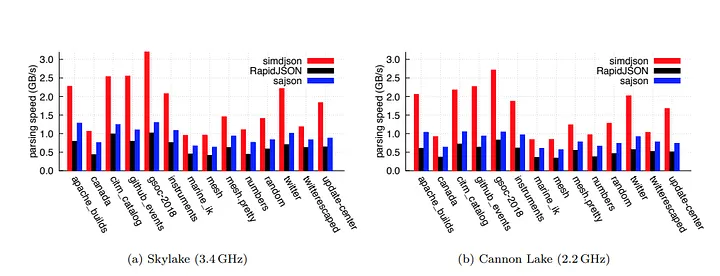
Benchmark chart showing SIMD-accelerated JSON parsing performance

SIMD JSON: Unlocking Maximum Performance for JSON Deserialization

Limitations of Traditional Scalar State Machine Parsers The JSON parsing algorithms we commonly use are based on scalar state machine parsers. Scalar parsers read the input string byte by byte, parsing it through state transitions within the state machine. For example: When encountering a quotation mark ("), it indicates the start of a string. When encountering a colon (:), it indicates that a value is expected next. Below is a simplified pseudo-code representation of how a scalar parser works: ...

September 22, 2025 · 7 min · Donghyung Ko